Granules in your gutters and what they say about your shingles
A gritty layer at the bottom of a downspout is worth a closer look, especially on a roof that isn't very old.
October 16, 2026 · 3 min read
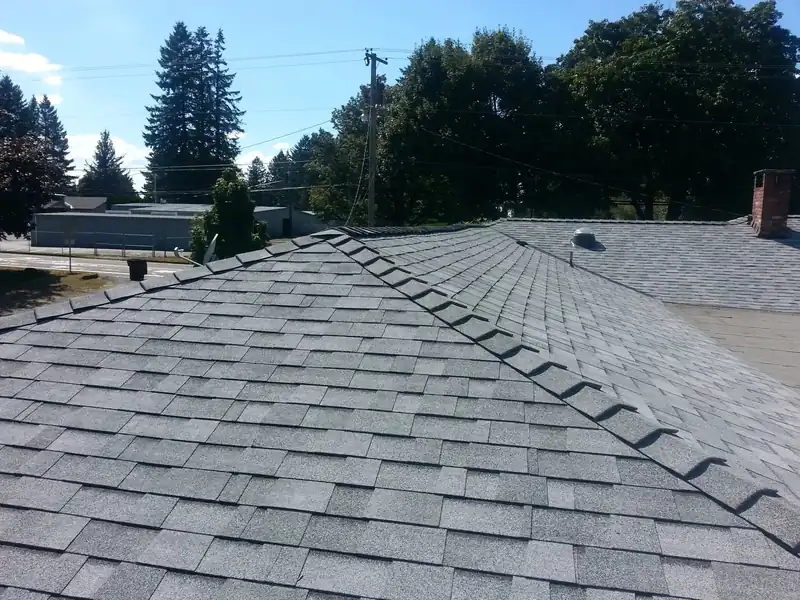
What granules are for
The rough, sandy surface on an asphalt shingle is made of mineral granules pressed into the asphalt. They aren't decoration. The granules shield the asphalt from sunlight, give the shingle its color, and add some resistance to wear. When enough of them wash away, the asphalt underneath is exposed to sun and weather, and it ages much faster.
That is why granules in the gutters are one of the signs Gregg Roofing lists when a roof needs attention. A few in the gutter is ordinary. A steady pile of them is a conversation worth having with a roofer.
Some loss is normal, some is not
A brand new roof often sheds a small amount of loose granules in its first months, and you may see a light dusting at the end of a downspout. Older roofs lose granules gradually as they age, too. What you're watching for is quantity and pattern.
- A thick layer of grit in the gutters or at the downspout exit, especially after a rain.
- Dark or shiny patches on the shingles where the granules are gone and the asphalt shows.
- Bald streaks below a chimney, vent or valley where water runs hardest.
- Shingles that look uneven in color from one section to the next.
- Granules collecting on a roof that is fairly young, which suggests something other than ordinary aging.
You can check most of this from the ground. Rinse out a section of gutter, look at the downspout, and use binoculars on the roof. Please don't climb up to take a look, because the same loose grit that fills your gutters is slippery underfoot.
Why a roof loses granules early
There are a few common causes. Age and sun are the usual ones. Aggressive pressure washing can knock granules loose, and so can scrubbing off moss. Foot traffic and tree limbs rubbing the surface can wear spots. Storms can scour a shingle, too.
The other cause is the shingle itself. Gregg Roofing says plainly that wind damage and shingle deterioration do not only happen to old roofs, and that they may come from an incorrectly installed roof or from failing or cheap products. If the roof is young and the granules are going, the product or the installation deserves a hard look.
When the product may have been recalled
Here is the part many homeowners don't know about. Shingle manufacturers have, at times, recalled certain products. If a recall applies to your roof, the manufacturer may have a claim process, and the paperwork for it can be confusing.
Gregg Roofing's wording on this is specific: if they determine it is a recalled product, they can help with the claim process for a nominal fee. Nobody can promise what a manufacturer will decide, so this is not a guarantee of any outcome. What the help does mean is that someone who handles roofing paperwork is looking at your situation, instead of you piecing it together alone.
What to gather before you call
- Photos of the gutters, the downspout exit and the worn areas of the roof, with dates if you can.
- A small jar of the granules you find, so the estimator can see them.
- Whatever paperwork you have for the roof: the original invoice, a contract, a home purchase inspection or any warranty paperwork.
- The approximate year the roof went on, and who installed it if you know.
- Notes on when you first noticed the grit and whether it's getting worse.
Don't worry if the list is thin. Plenty of people inherit a roof with no paperwork at all. The estimator can often identify a shingle line by looking at it and measuring it.
What the visit looks like
An estimator comes to the house, inspects the roof and takes measurements. They look at the granule loss, the condition of the shingles, the flashing and vents, and any sign of moisture getting in. From that they can tell you whether you have a roof that's simply wearing out, a repairable problem, or a product that may be worth taking up with the manufacturer.
Gregg Roofing's estimators have been in the trade for 20 years or more, and the company's approach is to explain what's going on and how to avoid it next time, not just to quote a job. If you've got grit in your gutters and aren't sure what it means, call the Camas office at (360) 834-3902 and ask for a free estimate and a look at the roof.
Gregg Roofing, LLC, (360) 834-3902
Call (360) 834-3902More articles
Standing seam metal or laminated shingle when tall firs hang over your roof
Both are good roofs, but they behave differently under needles, cones and a wet Northwest winter.
Why moss on a Northwest roof is worth dealing with early
A cleaning is cheap compared with replacing rotted sheathing, and the gap between the two can be a few months.