Why moss on a Northwest roof is worth dealing with early
A cleaning is cheap compared with replacing rotted sheathing, and the gap between the two can be a few months.
October 16, 2026 · 3 min read
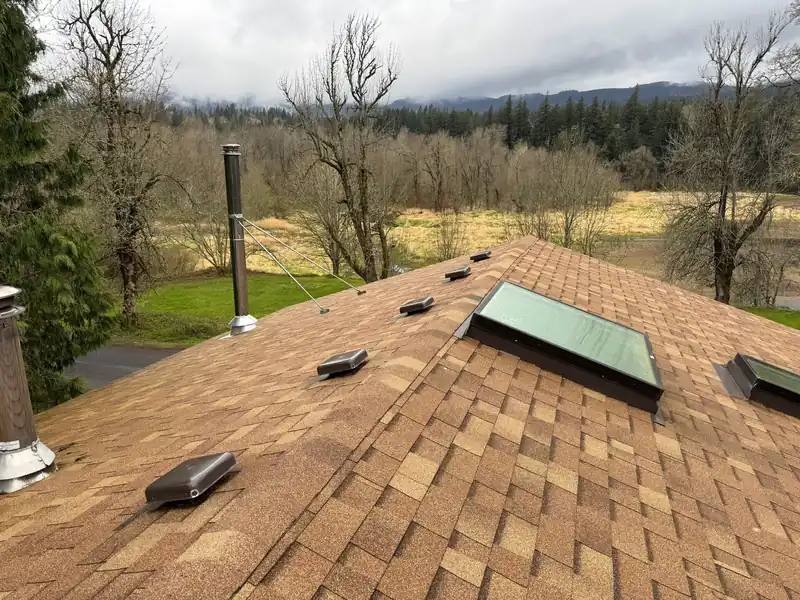
Moss is not just cosmetic
Most people in Camas, Washougal and Vancouver have looked up at a green patch on the roof and decided it can wait. A little moss looks harmless, even a bit charming on an old cabin. The trouble is what it does underneath, and how quickly the damage can pile up in a wet climate.
Moss holds water against the roof surface. It roots into the gaps between shingles, and as it grows it works its way under the edges. Gregg Roofing is blunt about it: as moss grows it can lift shingles, making the roof susceptible to leaks, and eventually it can cause rot in the roof sheathing. The sheathing is the plywood or boards the shingles are nailed to, and it's the structural layer that holds everything up.
The sentence worth remembering
Gregg Roofing puts it this way: what was once a cheap cleaning can become an expensive repair in the matter of a couple months. That is the whole argument for acting early. Moss doesn't announce the moment it crosses from surface problem to water problem. By the time a ceiling stain shows up inside, the water has usually been getting in for a while, soaking into the sheathing and the framing around it.
Where moss shows up first
Moss follows shade and moisture. On a typical Northwest house, check these places first:
- The north-facing slopes, which get the least sun and stay damp the longest.
- Any section under or near fir trees, where shade and falling needles combine.
- Valleys, where two roof planes meet and water runs together.
- The lower courses near the eave, where the roof dries out slowest.
- Behind chimneys, around skylights and anywhere debris sits and holds water.
Needles and cones matter more than people expect. A mat of fir debris in a valley is a sponge, and moss loves to start in it.
What you can see from the ground
You don't have to climb up to get a good first read, and you shouldn't. A wet roof is slippery, and most moss damage can be spotted from the yard with a pair of binoculars. Look for thick green or dark mats, shingle edges that look raised or curled, and shingles that seem to sit unevenly along a row. Look at the gutters for a gritty sediment of shingle granules, which can mean the surface is wearing. Inside, look at ceilings and the attic for stains, damp insulation or daylight where there shouldn't be any.
Cleaning versus repair
There is a right way and a wrong way to clean a roof. Aggressive pressure washing can strip the granules off asphalt shingles and shorten their life, so it can cause the very problem you're trying to prevent. Walking on a mossy roof can also crack or scuff the shingles. A careful cleaning and a look at the roof's condition is a different job from blasting it, and a good roofer can tell you which one your roof can take.
If the moss has already lifted shingles or gotten under the flashing, cleaning alone won't be enough. The damaged shingles need to be replaced, the flashing needs to be checked, and anywhere water has been getting in needs to be opened up so the sheathing can be inspected. If sheathing has gone soft, that section has to be replaced before new roofing goes over it. That's the expensive version, and it's the one the cheap cleaning is meant to avoid.
Keeping it from coming back
Moss is a moisture and shade problem, so the fixes are about letting the roof dry. Trim branches that shade the roof or hang over it. Keep gutters and valleys clear of needles. Have the roof looked at on a regular schedule, and after any season that was especially wet. Some homeowners add zinc or copper strips near the ridge to discourage regrowth, and it's fair to ask whether they make sense for your roof, since results depend on the roof and the site.
Gregg Roofing likes customers to understand how to prevent the next problem, not only to fix the current one. If you've got moss, lifted edges or a stain you can't explain, call the Camas office at (360) 834-3902 for a free estimate. Catching it this season is almost always cheaper than catching it the next one.
Gregg Roofing, LLC, (360) 834-3902
Call (360) 834-3902More articles
Standing seam metal or laminated shingle when tall firs hang over your roof
Both are good roofs, but they behave differently under needles, cones and a wet Northwest winter.
Granules in your gutters and what they say about your shingles
A gritty layer at the bottom of a downspout is worth a closer look, especially on a roof that isn't very old.