Pipe boots, roof vents and wind damage: what to check after a storm
The expensive leaks often start with a cracked rubber collar or a missing shingle, and both are easy to miss.
October 16, 2026 · 3 min read
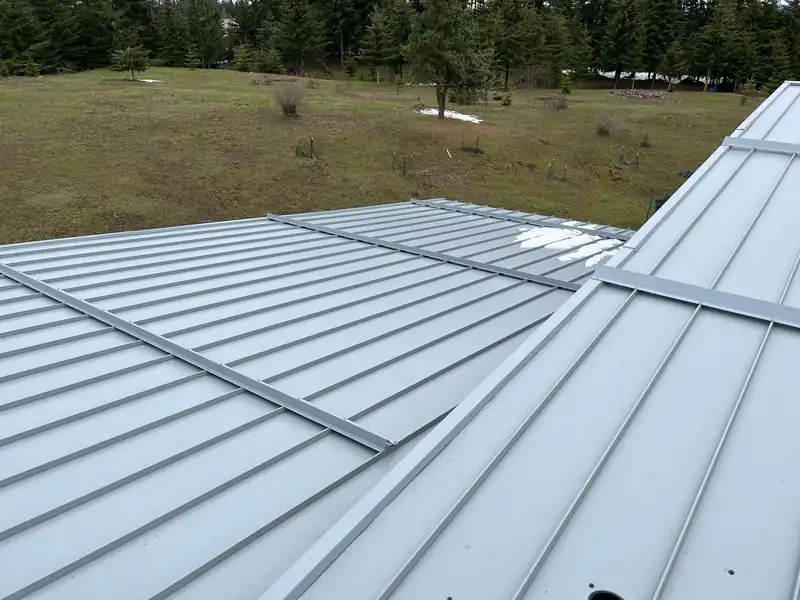
The small parts that cause big leaks
When people picture a roof leak, they imagine a big hole. In practice, many leaks start at small penetrations: the rubber boots around plumbing pipes, the roof vents that let the attic breathe, and the flashing and fasteners around them. These parts are built to seal a gap, and they take the weather every day.
Rubber and plastic age in the sun and cold. A pipe boot can crack at the collar, a seal can break, and a vent can loosen. Water then follows the pipe or the fastener into the attic, and you may not notice for a long time.
What to look for on pipe boots and vents
Gregg Roofing offers a short checklist for cracked pipe boots and roof vents: look for cracks, broken seals, rusted fasteners and debris build up. That is a good list to carry around the yard.
- Cracks or splits in the rubber collar around a plumbing pipe, often on the sunny side.
- A boot that has shifted or is no longer snug against the pipe.
- Broken or lifted seals around the base of a vent.
- Rusted nail or screw heads, or fasteners that are backing out.
- Needles, leaves and other debris piled up against a vent or in the valley beside it.
- Staining on the ceiling below, or a musty smell or damp insulation in the attic.
Most of this can be seen from the ground with binoculars. Check the attic with a flashlight if you can do it safely, looking for stains on the underside of the roof deck around pipes and vents. If you find damage, Gregg Roofing says to give them a call, and they can repair or replace the parts.
After a wind or ice storm
After a hard blow, walk around the house and look at the roof from several angles. You're looking for shingles that are missing, lifted or creased, ridge caps that have shifted, torn or bent flashing, and debris on the roof. Check the yard and the gutters for shingle pieces, too. A piece of shingle on the lawn tells you something came off the roof.
One point that surprises homeowners: wind damage doesn't only happen to old roofs. According to Gregg Roofing, it may come from an incorrectly installed roof or from failing or cheap products. A young roof that loses shingles in an ordinary storm is a roof that should be looked at closely.
Not every fix means a new roof
A customer named David wrote in a review that Josh came out, looked at the situation and came up with a creative solution that didn't involve tearing off the existing shingles. He also pointed out several areas that needed special attention to keep the roof in good shape. That is what a careful inspection can do. A good estimator should tell you what the problem actually is and what the smallest sensible repair would be, even if that means a repair is enough.
Insurance paperwork
If a storm damaged your roof, you may need to file a homeowners insurance claim. We can't tell you what your insurer will cover, because that depends on your policy and the adjuster's findings. What we can say is that good documentation helps.
- Take dated photos of the damage, from the ground and, if you hire someone to go up, of the roof itself.
- Keep any debris or damaged pieces that came off, until the claim is settled.
- Write down when the storm happened and when you first noticed the damage.
- Ask your roofer for a detailed written estimate you can pass along.
- Keep every receipt for emergency work done to limit further damage.
One customer wrote that after a severe ice and wind storm, Gregg Roofing was responsive to their emergency, gave a detailed quote that was honored upon completion, and that the office staff helped provide the additional information their homeowners insurance company needed. Another customer with a small leak after heavy rain said the office returned the call quickly and had a field technician at the house within two hours.
When to call
If you see damage, or you aren't sure what you're seeing, don't wait for the next storm to test it. Call the Camas office at (360) 834-3902 during business hours, Monday through Friday, and ask for an inspection and a free estimate. The office is open from 6:30 in the morning to 3:00 in the afternoon, so early calls are welcome.
Gregg Roofing, LLC, (360) 834-3902
Call (360) 834-3902More articles
Standing seam metal or laminated shingle when tall firs hang over your roof
Both are good roofs, but they behave differently under needles, cones and a wet Northwest winter.
Why moss on a Northwest roof is worth dealing with early
A cleaning is cheap compared with replacing rotted sheathing, and the gap between the two can be a few months.